
Computer network setup and IT infrastructure
Computers, laptops, and users via subscription.
Read more IT infrastructure problems rarely start with a major outage. More often, they manifest in small but costly signals—slow file access, intermittent office connectivity, unclear rights to critical systems, and archives that only exist “in principle.” When these weaknesses accumulate, they are no longer technical details. They become operational risks that slow teams down, slow service, and increase the likelihood of a security incident.
For a company, IT infrastructure is more than just servers, networks, and devices. It is the entire technological foundation that underpins day-to-day operations, data protection, and the ability for the business to continue operating in the event of a problem. The best environment is not necessarily the most expensive. It is the one that is designed for real needs, maintained in a disciplined manner, and can be managed predictably.
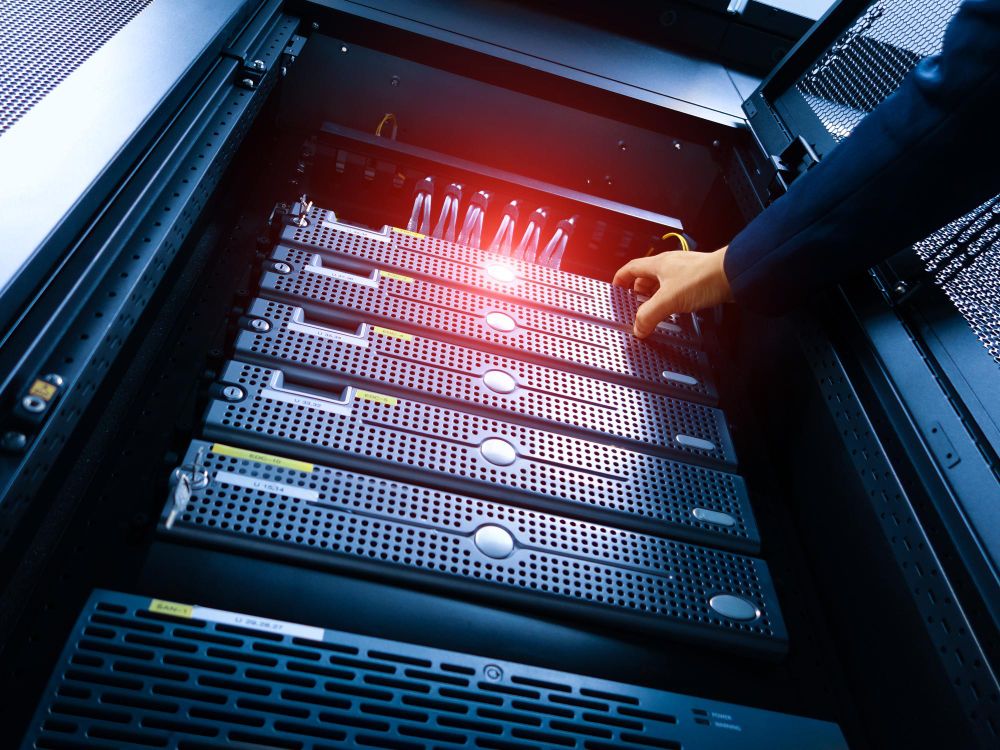
In practice, IT infrastructure encompasses several interconnected layers. The most visible are the end devices - computers, laptops, mobile phones, peripherals. Beneath them is the network foundation - internet connectivity, switches, firewall, Wi-Fi, VPN and traffic segmentation. Next are the server resources, whether they are local, in the cloud or in a hybrid model.
There is another layer that is often underestimated - management. This includes user accounts, access rights, security policies, monitoring, archiving, updates, inventory and incident procedures. Many companies have equipment, but do not have sufficient control over it. This is where most of the real risks arise.
When we talk about a stable environment, it is not just about the availability of equipment. It is about all the elements working as a system. If the network is good, but the archives are not tested, the environment is still vulnerable. If there are cloud services, but there is no clear access policy and multi-factor authentication, the convenience comes at a high price.
Managers typically don’t look for a “better firewall” or a “newer server.” They look for predictability. They want employees to work without interruption, customer data to be protected, and incidents to not lead to chaos. That’s why IT infrastructure should be evaluated through its impact on the business, not just through its technical parameters.
An unstable environment creates costs on several levels. There are direct losses - downtime, missed orders, delayed operations. There are also hidden losses - employee time, nervous switching between suppliers, lack of clarity about who is responsible. Add to this weak security controls, and the cost of the problem can become much higher than the cost of properly preventing it.
There is an important nuance here. Not every company needs a complex enterprise architecture. Small and medium-sized organizations more often need a well-organized, secure, and easy-to-maintain environment. The difference is significant. The goal is not maximum complexity, but maximum manageability.
In many organizations, the infrastructure is the result of years of “just-in-time” solutions. A new office is added without a comprehensive network plan. A cloud tool is implemented but without an integrated access policy. Devices are replaced but without a configuration standard. This may not seem dramatic at first, but as you grow, it starts to weigh heavily.
The first common weakness is the lack of standardization. When different computers, versions, network settings and accounts are maintained differently, support becomes reactive. Problems are resolved slowly, and dependence on a specific person increases.
The second is insufficient visibility. Without central monitoring, an asset inventory and clear accountability, the organization only learns about a problem after it has affected work. This is an expensive model because prevention is missing.
The third is in archiving and recovery. Many companies have backups, but they do not have proven recovery. This is a significant difference. The archive is only useful if it can be returned quickly and correctly in the event of a real incident.
The fourth weakness is in access management. Users with more rights than necessary, old accounts of departed employees, lack of multi-factor protection and unclear ownership of administrator accounts - these are conditions for incidents that often go unnoticed until the moment of the problem.
Good infrastructure starts with clarity. How many people work in the organization, from how many locations, with what systems, what is the dependence on the Internet, what data is processed and what are the acceptable levels of interruption. Without these questions, any technical solution is partial.
Then comes the architecture. It must be reliable enough for the current workload and flexible enough to grow. Sometimes this means local resources for specific applications. In other cases, the cloud model is more suitable due to easier management, scalability and remote access. There are also situations in which a hybrid option makes the most sense, especially if the company has legacy systems or regulatory requirements.
There is no universal formula. For an accounting firm, a manufacturing company and a commercial organization, the priorities are different. What they have in common is the need for control, protection and predictability. Therefore, the infrastructure should include a segmented network, secure remote access, centralized device management, clearly defined rights and a real working recovery plan.
One of the most common mistakes is choosing a model by inertia. Some companies keep everything on-premise because "that's how it's always been". Others move everything to the cloud because they automatically expect lower risk. Both solutions can be correct, but only if they match real processes.
On-premise infrastructure gives more direct control and is sometimes suitable for specific applications, constant work with large files or production environments. The disadvantage is that it requires more discipline in maintenance, backup and security.
The cloud model is often more predictable in terms of cost and more convenient for organizations with distributed teams. But convenience does not cancel the need for rules. Without access control, logging, archiving and clear administration, the cloud environment can also become a source of risk.
A hybrid approach is usually closest to the reality of growing companies. Some services are moved to the cloud, while others remain on-premises. This allows for gradual modernization, but only if the architecture is consistent, not a collection of unrelated solutions.
Many businesses view support as an afterthought - something that is included when there is a problem. In practice, support is part of the infrastructure itself. Without monitoring, regular checks, control over updates, and a clear helpdesk procedure, even a well-built environment gradually loses stability.
This is where the difference between a reactive and a managed model can be seen. The reactive model waits for an incident. The managed model looks for deviations in advance, analyzes recurring problems, and maintains documentation so that the environment does not depend on the memory of individual people. For small and medium-sized companies, this is often the more valuable approach because it gives them access to structure and expertise without building a large internal IT team.
That is why at Helpdesk Bulgaria we design, build and maintain IT infrastructure with a focus not only on incident resolution, but on the overall manageability of the environment - from the infrastructure foundation to accountability and prevention.
The best guideline is not how much equipment you own, but how much control you have. If the organization does not have a clear scenario for action in the event of an internet outage, a device crash or a compromised account, the infrastructure is not mature enough. If there is no accurate picture of which systems are critical, who has access to them and how long it will take to restore them, the risk is higher than it seems.
Useful questions are simple. Can the company continue to work in the event of a problem in a core system? Are archives tested? Is there a central view of devices, licenses and security events? Does management know what the priorities are for the next 12 months - replacement, migration, protection, standardization? If the answers are hesitant, the environment probably already needs a review.
The quickest way to find out is an IT audit of your company infrastructure. See also what an IT audit includes and costs.
A stable IT infrastructure is not defined by never having incidents. It is defined by the business not losing control when an incident occurs. And that is the result of planning, discipline, and a partner who understands that technology only makes sense when it keeps things running without unnecessary risk.
A real-world example: reliable network infrastructure for a logistics operation.
Let's talk about your infrastructure: we will review your network, servers and backups and suggest the best solution and price. Contact us.
Tags:
Share this article:
Related service:
Computers, laptops, and users via subscription.
Read moreThank you! We will get back to you within 1 business day.
Something went wrong while sending. Please try again.