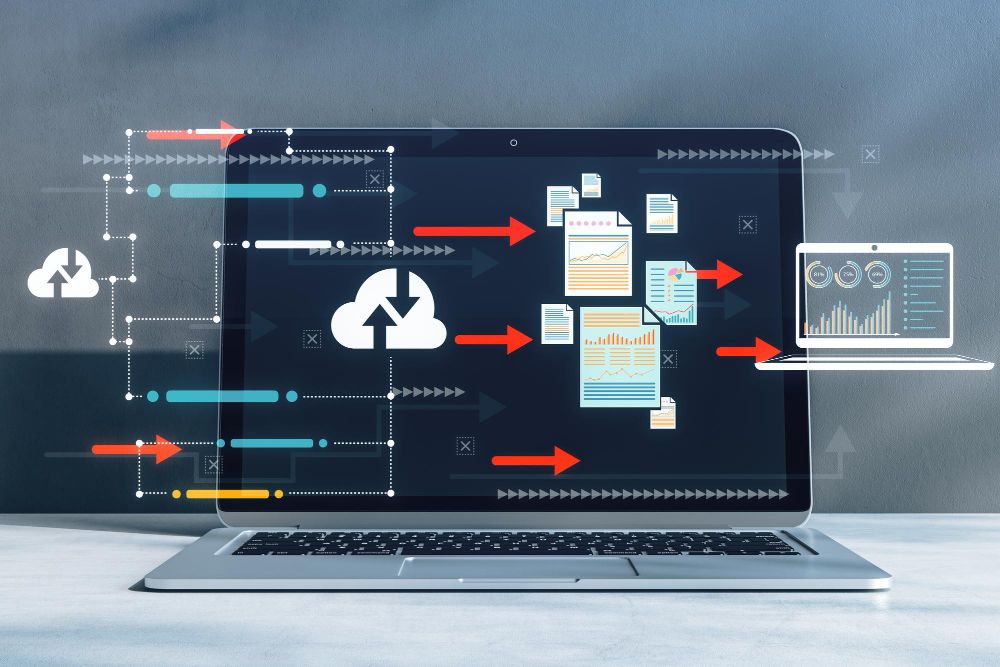

Proactive monitoring of IT systems in business
When employees start their day and email doesn’t work, shared folders open slowly, or a business system crashes, the problem is rarely just technical. It stops sales, slows down service, strains teams, and creates tension throughout the organization. That’s why proactive monitoring of IT systems is not an optional extra, but the foundation for stable and predictable work.
The reactive support model starts after the incident. Someone reports a problem, the IT team checks, locates the cause, and fixes the problem. This has its place, but when it’s the only approach, the business pays with downtime, lost time, and higher risk. Proactive monitoring works differently - systems are constantly monitored, and deviations are detected before they turn into a real crash.
What is proactive monitoring of IT systems
Proactive monitoring is an organized process for monitoring critical components in the IT environment - servers, workstations, network equipment, Internet connectivity, cloud services, backups, security solutions and key business applications. The goal is not just to see if a device is turned on, but to detect early signs of a problem.
This includes monitoring CPU and memory usage, disk space, service errors, unusual network behavior, failed backups, dropped devices, critical updates or signs of compromise. When these signals are registered in time, the team can take action before users even experience difficulty.
From a business perspective, this means fewer downtimes, shorter incidents and better control over the environment. The difference is significant. Instead of waiting for the problem to become visible to everyone, it is managed at an early stage.
Why reactive support is no longer enough
Many companies still work according to a familiar scenario - when something stops, then help is sought. At first glance, this seems economical, because you only pay when needed. In practice, however, the price is often higher. The response time begins after a signal is sent, diagnostics are performed under pressure, and in the meantime, business processes have already been affected.
In a more busy environment, the risk grows rapidly. If the company relies on a central file server, ERP system, IP telephony, Microsoft 365, remote access or several offices, even a small deviation can have an effect on dozens of people at the same time. A full disk, a failed backup or an unstable switch are not minor technical details. They are direct operational risk.
Here, the proactive approach changes the logic of service. Instead of focusing on repair after damage, the focus shifts to early detection, prevention and control. This is a more mature solution for companies that want to reduce their dependence on accidents and improvisation.
Which systems are reasonable to monitor constantly
Not every environment requires the same depth of monitoring. A small company with a few core services has different needs than an organization with a hybrid infrastructure, many users, and strict availability requirements. Yet there are components that almost always fall within the scope of quality monitoring.
First of all, servers and virtual environments are the focus, because that is where key services are concentrated. Next are network devices - routers, firewall solutions, switches, and access points, because a network problem can quickly block all work. Workstations also matter, especially when monitoring protection status, updates, disk space, and overall system health.
Backups deserve special attention. Many companies believe that backups exist just because they are set up. The real question is whether they are executed successfully, whether they can be restored, and whether they cover critical data. Monitoring here is not a formality, but a control over the ability of the business to continue after an incident.
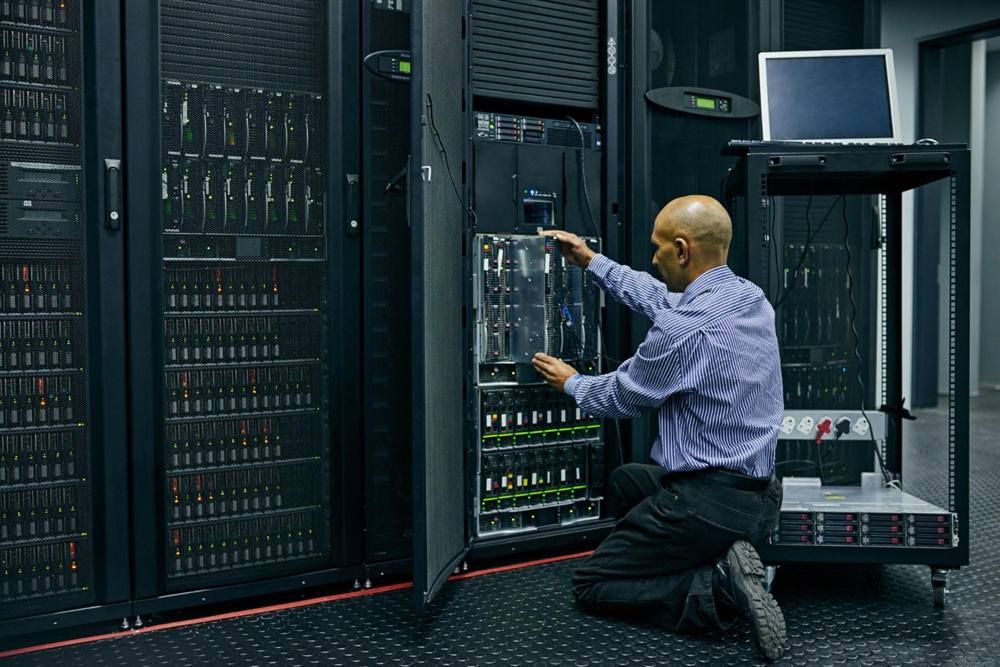
Real-time monitoring covers operating systems, servers and the network: CPU and memory load, free disk space, service response time and performance metrics.
What are the benefits of proactive monitoring of IT systems
The most visible benefit is fewer unplanned outages. This in itself has a direct value because it reduces productivity loss and customer service interruptions. But the effect does not end there.
Proactive monitoring helps with more accurate capacity planning. If a server is systematically operating at the limit of its resource, this can be seen in time and an upgrade can be planned before serious delays occur. The same applies to internet connectivity, cloud licenses, archive space or network load.
There is also a strong security aspect. Not every incident begins with an obvious breach. Sometimes the first signs are unusual logins, unusual network activity, stopped security agents or unexpected changes to critical services. When these signals are monitored systematically, the response time is shorter and the potential damage is more limited.
For company management, predictability is an important benefit. Instead of maintenance looking like a series of emergencies, it becomes a controlled process with clear priorities, accountability, and visibility into the state of the environment.
The next step after monitoring is letting recurring tasks run on their own - see IT automation for fewer interruptions.
Infrastructure monitoring also helps with capacity planning - you see in time when you will need more space or a more powerful server, instead of reacting after an outage.
What a good monitoring process looks like
The tool itself is not enough. A good result is achieved when there is a clearly defined process behind monitoring. First, it is determined which systems are critical to the business and what indicators need to be monitored. Then, thresholds, alarms, and escalation rules are set so that notifications are useful, not just numerous.
This is an important point because poorly configured monitoring creates noise. If the team receives dozens of irrelevant signals, truly critical events may remain underestimated. Therefore, discipline in settings is required, as well as a periodic review of which alarms provide value and which ones need to be optimized.
Then comes the response. When a problem is detected, there should be a specific course of action - automated correction, notification of the responsible team, remote intervention or escalation to the client if a solution with business implications is needed. This is where the difference between monitoring as a function and monitoring as a real managed service becomes apparent.
Where are the limitations and what depends on the specific environment
Proactive monitoring does not mean that all problems can be prevented. Hardware can fail suddenly, an external supplier can fail, and human error is always a factor. Expecting that monitoring eliminates every risk is unrealistic.
However, it reduces the likelihood that small signals will grow into major incidents. It also shortens the time to detect the problem, which in many cases is decisive. There is a serious difference in consequences between a failure detected after 5 minutes and a failure noticed after 2 hours.
The maturity of the IT environment itself also matters. If the infrastructure is outdated, undocumented, and accumulated without a clear standard, monitoring will show the problems, but will not solve them structurally on its own. In such cases, it must go hand in hand with tidying up the environment, updating critical components, and introducing clear policies.
How to determine if your company needs this approach
If your organization’s outages are primarily detected by users, that’s a clear signal. The same goes for if there’s no visibility into whether backups are successful, if network issues are slow to diagnose, or if performance starts to drop without a timely explanation.
Another indicator is reliance on individuals. When knowledge of the environment is concentrated in a single internal IT specialist or external contractor without a structured process, business risk increases. Proactive monitoring creates better traceability, a clearer picture of the status, and a more sustainable service model.
For small and medium-sized companies, this is often the most practical way to gain a level of control that would otherwise require an internal team and a permanent operational resource. When the service is organized properly, it combines monitoring, response, accountability, and recommendations for improvement into a consistent framework.
What to look for in a service provider
It’s not enough for a provider to claim to monitor systems. What’s more important is what exactly is being monitored, who analyzes the signals, and what response follows in the event of a deviation. There is a difference between an automated email notification and a real operational process with priorities, responsibilities and follow-ups.
Seek clarity on scope, working hours, escalation criteria and accountability. It is useful to know how incidents are documented, how trends are tracked and whether you receive specific recommendations for risk reduction. In a mature service, monitoring is not just observation, but a tool for better management of the IT environment.
For companies looking for a long-term external partner, this is of particular value. When monitoring is part of a comprehensive support, context is created - the team knows the infrastructure, incident history and business-critical dependencies. This means faster response and more accurate solutions.
When implemented correctly, proactive monitoring does not just reduce the number of technical issues. It gives businesses more peace of mind, fewer surprises and clearer control over the environment on which they depend every working day.
At Helpdesk Bulgaria, 24/7 monitoring of servers and workstations is included in all plans of our subscription computer support. When something goes off track, the alert comes to us, not to your employees.
A real-world example: automated patch management in a large server environment.
Another example: how monitoring caught a failing RAID drive early - with no data loss.
Let's talk about monitoring your systems: we will review which servers, networks and services are monitored today and suggest the best solution and price. See server support or let's talk about your needs directly.
Tags:
Thank you! We will get back to you within 1 business day.
Something went wrong while sending. Please try again.